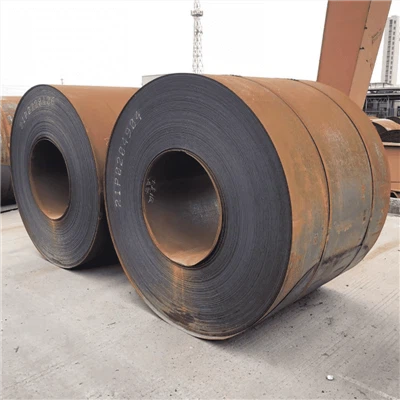
As a supplier of spring steel strip, I am often asked about the quality standards for this essential material. Spring steel strip is used in a wide range of applications, from automotive components to industrial machinery, and ensuring its quality is crucial for the performance and reliability of the end products. In this blog post, I will delve into the key quality standards for spring steel strip and explain why they matter.
Chemical Composition
The chemical composition of spring steel strip is one of the most important factors that determine its quality. Different grades of spring steel have specific chemical compositions that are designed to provide the desired mechanical properties. For example, 1095 spring steel strip, which you can learn more about here, is a high-carbon steel that contains approximately 0.90 - 1.03% carbon. This high carbon content gives the steel its excellent strength and hardness, making it suitable for applications where high elasticity and wear resistance are required.
In addition to carbon, spring steel strip may also contain other elements such as manganese, silicon, chromium, and vanadium. These elements are added in specific amounts to enhance the steel's properties. Manganese, for instance, improves the hardenability of the steel, while silicon increases its strength and resistance to oxidation. Chromium and vanadium are often added to improve the steel's corrosion resistance and toughness.
The chemical composition of spring steel strip is typically controlled through a combination of melting and refining processes. During the melting process, the raw materials are carefully selected and mixed to achieve the desired chemical composition. The molten steel is then refined to remove impurities and adjust the composition to the required specifications.
Mechanical Properties
The mechanical properties of spring steel strip are another critical aspect of its quality. These properties include tensile strength, yield strength, elongation, hardness, and fatigue resistance.
- Tensile Strength: Tensile strength is the maximum stress that a material can withstand before it breaks under tension. Spring steel strip is required to have high tensile strength to ensure that it can withstand the forces applied to it in various applications. The tensile strength of spring steel strip is typically measured in megapascals (MPa) or pounds per square inch (psi).
- Yield Strength: Yield strength is the stress at which a material begins to deform plastically. It is an important property for spring steel strip because it determines the maximum load that the spring can withstand without permanent deformation. The yield strength of spring steel strip is usually lower than its tensile strength.
- Elongation: Elongation is the percentage increase in length of a material when it is stretched to its breaking point. Spring steel strip needs to have sufficient elongation to ensure that it can be formed into the desired shape without cracking or breaking. A higher elongation value indicates better ductility.
- Hardness: Hardness is a measure of a material's resistance to indentation or scratching. Spring steel strip is typically heat-treated to achieve the desired hardness. The hardness of spring steel strip is usually measured using the Rockwell or Brinell hardness scales.
- Fatigue Resistance: Fatigue resistance is the ability of a material to withstand repeated loading without failure. Spring steel strip is often subjected to cyclic loading in applications such as springs, and therefore, it needs to have good fatigue resistance. The fatigue resistance of spring steel strip is influenced by factors such as its chemical composition, microstructure, and surface finish.
Microstructure
The microstructure of spring steel strip plays a significant role in determining its mechanical properties. The microstructure refers to the arrangement of the different phases and grains in the steel. A fine and uniform microstructure is generally desirable for spring steel strip because it provides better mechanical properties and fatigue resistance.
The microstructure of spring steel strip is influenced by factors such as the chemical composition, heat treatment, and rolling process. Heat treatment is a critical step in the production of spring steel strip, as it can be used to control the microstructure and improve the mechanical properties. For example, quenching and tempering are common heat treatment processes used to harden and strengthen spring steel strip.
Surface Finish
The surface finish of spring steel strip is also an important quality standard. A smooth and clean surface finish is essential for the performance and durability of the spring. A rough or uneven surface can lead to stress concentrations, which can reduce the fatigue life of the spring.


The surface finish of spring steel strip is typically measured in terms of surface roughness. The surface roughness is usually expressed in micrometers (μm) or microinches (μin). A lower surface roughness value indicates a smoother surface.
To achieve a good surface finish, spring steel strip is often subjected to processes such as grinding, polishing, or pickling. These processes can remove surface defects and improve the surface quality of the steel.
Dimensional Accuracy
Dimensional accuracy is another crucial quality standard for spring steel strip. The dimensions of the spring steel strip, such as thickness, width, and length, need to be within the specified tolerances to ensure proper fit and function in the end products.
The dimensional accuracy of spring steel strip is typically controlled through a combination of rolling and finishing processes. During the rolling process, the steel is passed through a series of rollers to reduce its thickness and width to the desired dimensions. The finishing processes, such as cutting and slitting, are then used to ensure that the length and width of the steel strip are within the specified tolerances.
Quality Control
To ensure that the spring steel strip meets the required quality standards, a comprehensive quality control system is essential. Quality control involves a series of inspections and tests at various stages of the production process, from raw material inspection to final product testing.
Some of the common quality control measures for spring steel strip include:
- Chemical Analysis: Chemical analysis is used to verify the chemical composition of the spring steel strip. This is typically done using techniques such as spectroscopy or wet chemical analysis.
- Mechanical Testing: Mechanical testing is used to measure the mechanical properties of the spring steel strip, such as tensile strength, yield strength, and elongation. This is usually done using a universal testing machine.
- Microstructural Analysis: Microstructural analysis is used to examine the microstructure of the spring steel strip. This is typically done using techniques such as optical microscopy or electron microscopy.
- Surface Inspection: Surface inspection is used to check the surface finish of the spring steel strip for defects such as cracks, scratches, or pits. This is usually done using visual inspection or non-destructive testing techniques such as ultrasonic testing or magnetic particle testing.
- Dimensional Inspection: Dimensional inspection is used to measure the dimensions of the spring steel strip to ensure that they are within the specified tolerances. This is usually done using measuring tools such as calipers, micrometers, or gauges.
Why Quality Standards Matter
Meeting the quality standards for spring steel strip is essential for several reasons. Firstly, it ensures the performance and reliability of the end products. Springs made from high-quality spring steel strip are more likely to withstand the forces and stresses applied to them, resulting in longer service life and fewer failures.
Secondly, quality standards help to ensure the safety of the end products. In applications such as automotive components or industrial machinery, the failure of a spring can have serious consequences, including accidents and injuries. By using high-quality spring steel strip, manufacturers can reduce the risk of such failures and ensure the safety of their products.
Finally, meeting the quality standards for spring steel strip can help to improve the reputation of the supplier. Customers are more likely to trust and do business with a supplier who can consistently provide high-quality products. By maintaining strict quality control measures and meeting the required quality standards, suppliers can build a strong reputation in the market and attract more customers.
Contact Us for Procurement
If you are in the market for high-quality spring steel strip, we would be delighted to discuss your requirements. Our team of experts is dedicated to providing the best products and services to our customers. We have a wide range of spring steel strip grades available, including 1095 spring steel strip, and we can customize the products to meet your specific needs.
Whether you are a small business or a large corporation, we can offer you competitive prices and reliable delivery. Contact us today to start a conversation about your spring steel strip procurement needs.