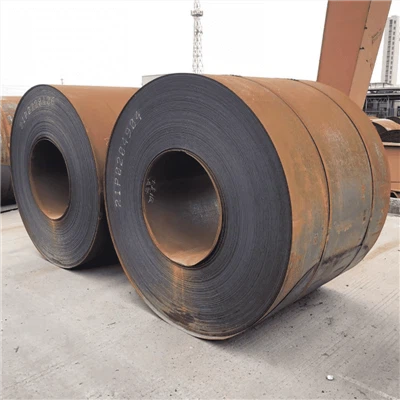
Hey there! As a spring steel supplier, I've been getting a lot of questions lately about how spring steel performs in high - temperature environments. So, I thought I'd take some time to break it down for you.
First off, let's talk about what spring steel is. Spring steel is a type of steel that's known for its high yield strength and elasticity. It's commonly used in applications where it needs to return to its original shape after being bent or stretched, like in springs, of course, but also in things like automotive suspension components and industrial machinery.
Now, when it comes to high - temperature environments, spring steel has some unique characteristics. One of the key factors is its heat resistance. Different grades of spring steel have different levels of heat resistance. For example, some high - carbon spring steels can start to lose their strength and elasticity when exposed to temperatures above 200°C (392°F). As the temperature rises, the steel's microstructure begins to change. The carbon in the steel can react with oxygen in the air, causing oxidation. This oxidation can lead to the formation of a layer of rust on the surface of the steel, which not only looks bad but can also weaken the material over time.
But it's not all doom and gloom. There are ways to improve the performance of spring steel in high - temperature environments. One method is through heat treatment. By subjecting the spring steel to specific heating and cooling processes, we can change its microstructure to make it more heat - resistant. For instance, quenching and tempering can increase the steel's hardness and toughness, which can help it withstand higher temperatures without losing its shape or strength.
Another important aspect is the choice of alloying elements. Some alloying elements, like chromium, nickel, and molybdenum, can enhance the heat resistance of spring steel. Chromium, for example, forms a protective oxide layer on the surface of the steel, which helps prevent further oxidation. Nickel can improve the steel's ductility and toughness at high temperatures, while molybdenum can increase its strength and creep resistance.
Let's take a look at some specific types of spring steel and how they perform in high - temperature environments. The 1095 Spring Steel Strip is a high - carbon spring steel. It's known for its excellent strength and elasticity at room temperature. However, when exposed to high temperatures, it can be a bit more vulnerable. The high carbon content makes it more prone to oxidation, and its strength can start to decline at relatively lower temperatures compared to some alloyed spring steels.
On the other hand, the 1074 Spring Steel Wire has a slightly lower carbon content. This gives it a bit better performance in high - temperature environments. It's still not as heat - resistant as some of the more highly alloyed steels, but it can handle moderate temperatures better than the 1095 spring steel strip.
In high - temperature applications, it's also important to consider the mechanical stress on the spring steel. As the temperature rises, the steel becomes more malleable, which means it can deform more easily under stress. This can be a problem in applications where the spring steel needs to maintain its shape and provide a consistent level of force. For example, in a high - temperature engine valve spring, if the spring loses its elasticity due to the high temperature, it won't be able to close the valve properly, which can lead to engine performance issues.
To mitigate these problems, engineers often design springs with a higher safety factor when using spring steel in high - temperature environments. This means that the spring is designed to handle more stress than it would normally encounter in a lower - temperature application. Additionally, proper lubrication can help reduce friction and wear on the spring steel, which can also improve its performance at high temperatures.
So, if you're in the market for spring steel for high - temperature applications, it's crucial to choose the right grade and have it properly heat - treated. At our company, we have a wide range of spring steel products, and our team of experts can help you select the best option for your specific needs. Whether you need a high - carbon spring steel for a low - temperature application or an alloyed spring steel for a high - temperature environment, we've got you covered.
If you're interested in learning more about our spring steel products or have any questions about how they perform in high - temperature environments, don't hesitate to reach out. We're always happy to have a chat and help you find the perfect solution for your project.