Hey there! As a carbon steel supplier, I get asked a lot about the fatigue resistance of carbon steel. So, I thought I'd take some time to break it down for you.
First off, let's talk about what fatigue resistance actually means. Fatigue is the weakening of a material caused by repeated loading and unloading. When a material is subjected to cyclic stresses, it can develop tiny cracks that grow over time, eventually leading to failure. Fatigue resistance is a measure of how well a material can withstand these cyclic stresses without failing.
Now, carbon steel is a widely used material in many industries, from construction to automotive. It's known for its strength, durability, and affordability. But how does it fare when it comes to fatigue resistance?
Well, the fatigue resistance of carbon steel depends on several factors, including the carbon content, the microstructure, and the manufacturing process. Generally speaking, carbon steel with a higher carbon content tends to have better fatigue resistance. This is because the carbon atoms help to strengthen the steel, making it more resistant to cracking.
However, it's not just about the carbon content. The microstructure of the steel also plays a crucial role. For example, a fine-grained microstructure can improve the fatigue resistance of carbon steel. This is because the smaller grains act as barriers to crack propagation, making it more difficult for cracks to grow.
The manufacturing process can also have a significant impact on the fatigue resistance of carbon steel. For instance, hot-rolled carbon steel typically has better fatigue resistance than cold-rolled carbon steel. This is because the hot-rolling process helps to align the grains in the steel, making it more uniform and less prone to cracking.
Let's take a closer look at some specific types of carbon steel and their fatigue resistance.
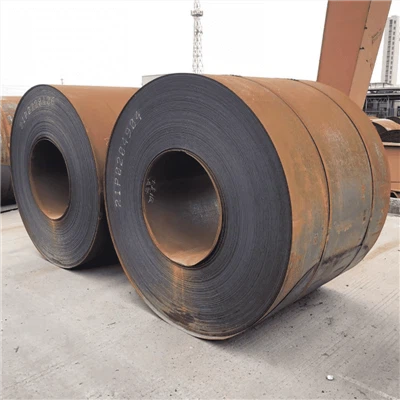
1008 Carbon Steel Coil
1008 Carbon Steel Coil is a low-carbon steel with excellent formability and weldability. It's commonly used in applications where strength is not the primary concern, such as in the manufacturing of automotive body panels and appliances. While 1008 carbon steel may not have the highest fatigue resistance compared to some other types of carbon steel, it still offers decent performance in many applications.
1010 Carbon Steel Wire
1010 Carbon Steel Wire is another low-carbon steel that is often used in wire products, such as nails, staples, and springs. It has good ductility and can withstand moderate amounts of bending and torsion. When it comes to fatigue resistance, 1010 carbon steel wire can perform well in applications where the cyclic stresses are not too severe.
1018 Carbon Steel Bar
1018 Carbon Steel Bar is a medium-carbon steel that offers a good balance of strength and machinability. It's commonly used in the manufacturing of shafts, gears, and other machine parts. With its higher carbon content compared to 1008 and 1010 carbon steel, 1018 carbon steel bar generally has better fatigue resistance. However, the actual fatigue performance can still be influenced by factors such as the heat treatment and the surface finish.
1045 Carbon Steel Pipe
1045 Carbon Steel Pipe is a high-carbon steel that is known for its strength and toughness. It's often used in applications where high-pressure and high-stress conditions are present, such as in oil and gas pipelines. Due to its high carbon content, 1045 carbon steel pipe typically has excellent fatigue resistance. However, it's important to note that proper heat treatment and quality control are essential to ensure optimal performance.


SS400 Carbon Steel Plate
SS400 Carbon Steel Plate is a general-purpose carbon steel plate that is widely used in construction and structural applications. It has good strength and weldability, and its fatigue resistance can vary depending on the specific application and the manufacturing process. In some cases, SS400 carbon steel plate may need to be heat-treated or surface-treated to improve its fatigue performance.
So, how can you improve the fatigue resistance of carbon steel? Here are a few tips:
- Choose the right grade of carbon steel: As we've seen, different grades of carbon steel have different fatigue resistance properties. Make sure to select the grade that is most suitable for your application.
- Optimize the manufacturing process: The manufacturing process can have a significant impact on the fatigue resistance of carbon steel. For example, proper heat treatment can help to improve the microstructure and strengthen the steel.
- Control the surface finish: A smooth surface finish can reduce the stress concentration and improve the fatigue resistance of carbon steel. Make sure to use appropriate machining and finishing techniques.
- Apply surface treatments: Surface treatments such as shot peening or nitriding can help to improve the fatigue resistance of carbon steel by introducing compressive stresses on the surface.
In conclusion, the fatigue resistance of carbon steel is an important consideration in many applications. By understanding the factors that affect fatigue resistance and taking appropriate measures to improve it, you can ensure that your carbon steel products perform well and have a long service life.
If you're interested in purchasing carbon steel products, I'd be more than happy to help. We offer a wide range of carbon steel products, including 1008 Carbon Steel Coil, 1010 Carbon Steel Wire, 1018 Carbon Steel Bar, 1045 Carbon Steel Pipe, and SS400 Carbon Steel Plate. Just reach out to us, and we'll work with you to find the right solution for your needs.