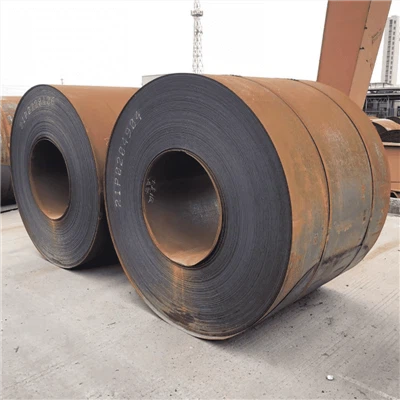
Hey there! As a supplier of Inconel coils, I've seen firsthand how heat treatment can have a huge impact on the properties of these amazing materials. In this blog, I'm gonna break down what heat treatment is, how it affects Inconel coils, and why it matters for your projects.
First off, let's talk about what Inconel is. Inconel is a family of nickel - chromium - based superalloys known for their excellent corrosion resistance, high - temperature strength, and oxidation resistance. These properties make Inconel coils ideal for a wide range of applications, from aerospace and gas turbines to chemical processing and marine environments.
Now, heat treatment is a process that involves heating and cooling a material in a controlled way to change its physical and mechanical properties. There are several types of heat treatment, but the most common ones for Inconel coils are annealing, solution treatment, and aging.
Annealing is a heat treatment process where the Inconel coil is heated to a specific temperature and then slowly cooled. This helps to relieve internal stresses that may have been introduced during manufacturing, such as cold working. When you anneal an Inconel coil, it becomes more ductile, which means it can be bent and formed more easily without cracking. It also improves the coil's machinability, making it easier to cut and shape.
Solution treatment is another important heat - treatment step. In this process, the Inconel coil is heated to a high temperature to dissolve all the alloying elements in the nickel matrix. After that, it's rapidly cooled, usually by quenching in water or oil. This creates a homogeneous structure in the coil, which enhances its strength and corrosion resistance. Solution - treated Inconel coils are often used in applications where high strength and resistance to harsh environments are required.
Aging, also known as precipitation hardening, is a heat - treatment process that follows solution treatment. The coil is heated to a lower temperature for a specific period of time. During this process, fine particles called precipitates form within the nickel matrix. These precipitates act as obstacles to the movement of dislocations in the material, which significantly increases its strength and hardness. Aging can be tailored to achieve different levels of strength and hardness depending on the specific requirements of the application.
So, what are the specific effects of heat treatment on the properties of Inconel coils?
Mechanical Properties
- Strength: Heat treatment can significantly increase the strength of Inconel coils. Solution treatment and aging, in particular, can lead to a substantial improvement in yield strength and ultimate tensile strength. This means that the coil can withstand higher loads without deforming or breaking. For example, in aerospace applications, where components need to withstand extreme forces during flight, heat - treated Inconel coils are essential.
- Hardness: Aging treatment can increase the hardness of Inconel coils. A harder coil is more resistant to wear and abrasion, which is crucial in applications where the coil comes into contact with other materials or experiences friction. For instance, in chemical processing equipment, where the coil may be exposed to abrasive chemicals, a harder Inconel coil will have a longer service life.
- Ductility: Annealing can improve the ductility of Inconel coils. A more ductile coil can be formed into complex shapes without cracking. This is important in manufacturing processes where the coil needs to be bent, rolled, or stamped into specific parts.
Corrosion Resistance
Heat treatment can also enhance the corrosion resistance of Inconel coils. Solution treatment helps to create a uniform structure in the coil, which reduces the likelihood of corrosion. Additionally, the formation of protective oxide layers on the surface of the coil during heat treatment can further improve its resistance to corrosion. In marine environments, where the coil is exposed to saltwater, heat - treated Inconel coils can resist corrosion for a much longer time compared to non - heat - treated ones.
Oxidation Resistance
Inconel coils are already known for their good oxidation resistance, but heat treatment can make it even better. The high - temperature exposure during heat treatment can promote the formation of a stable oxide layer on the surface of the coil. This oxide layer acts as a barrier, preventing further oxidation of the underlying material. This is especially important in high - temperature applications, such as gas turbines, where the coil is exposed to hot gases and oxygen.
Let's take a look at an example of how heat treatment can affect the properties of an Inconel coil. Consider an Inconel 783 Coil. Inconel 783 is a high - strength, low - thermal - expansion superalloy. When it undergoes proper heat treatment, its strength and corrosion resistance are enhanced. The solution treatment and aging process can increase its yield strength and make it more resistant to oxidation and corrosion in high - temperature and high - humidity environments.


As a supplier of Inconel coils, I understand the importance of heat treatment in meeting the specific requirements of different applications. Whether you need a coil with high strength for aerospace applications or a coil with excellent corrosion resistance for chemical processing, we can provide heat - treated Inconel coils that meet your needs.
If you're in the market for Inconel coils and want to learn more about how heat treatment can benefit your project, don't hesitate to reach out. We're here to help you choose the right Inconel coil and the appropriate heat - treatment process. Our team of experts can provide you with detailed information and guidance to ensure that you get the best product for your application.
Contact us today to start a discussion about your Inconel coil requirements. We look forward to working with you!