

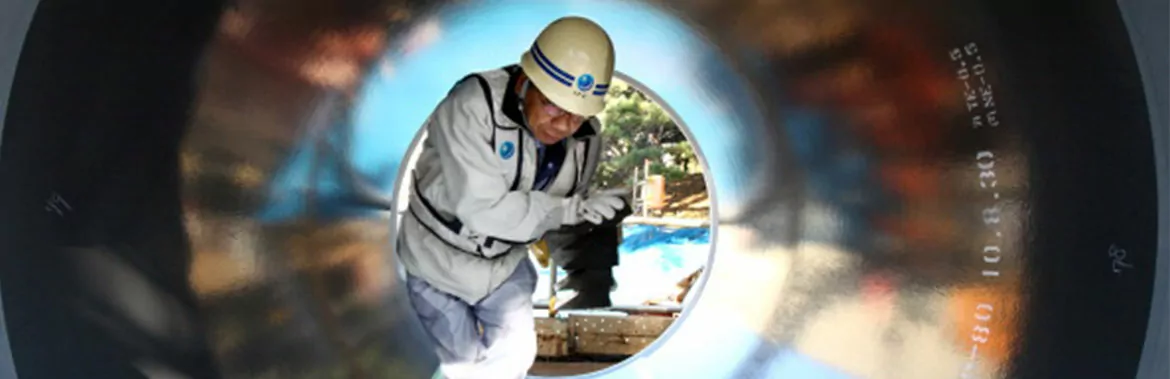
For cities around the world, ensuring reliable access to clean water is becoming increasingly important.
Water is not only a limited resource, but also one that requires significant investment in treatment, distribution, and maintenance. For municipal governments, reducing water loss has become a critical long-term policy priority.
Tokyo provides one of the most successful real-world examples of how material selection can fundamentally improve urban infrastructure performance.
The Problem: Severe Water Loss in the 1970s
In the 1970s, the Tokyo City Water Board faced a serious challenge.
The city's water distribution system was experiencing approximately 17% water loss, mainly due to:
- aging lead pipes
- deteriorating cast iron pipelines
- frequent underground leakage
The difficulty was not only identifying leaks, but repairing them efficiently.
- Once a damaged section was located:
- entire pipeline segments had to be excavated
- surrounding infrastructure was disrupted
replacement work often triggered further failures in adjacent sections
Urban planners feared a continuous cycle of repair without long-term resolution.
Additional Risk: Earthquake Vulnerability
Tokyo's geographical location near major fault lines added another layer of concern.
The existing pipeline materials:
- lacked sufficient seismic resistance
- were prone to fracture under ground movement
- required frequent maintenance after structural stress events
This made long-term reliability a major engineering issue.
The Turning Point: Switching to Stainless Steel
The solution emerged from a shift in material strategy.
As explained by John Rowe, Secretary-General of the International Stainless Steel Forum:
> "They needed a material strong enough to withstand seismic shocks and resistant to corrosion over a longer life cycle."
Stainless steel became the preferred solution due to several key properties:
- high strength-to-weight ratio
- excellent corrosion resistance
- long service life
- suitability for potable water systems
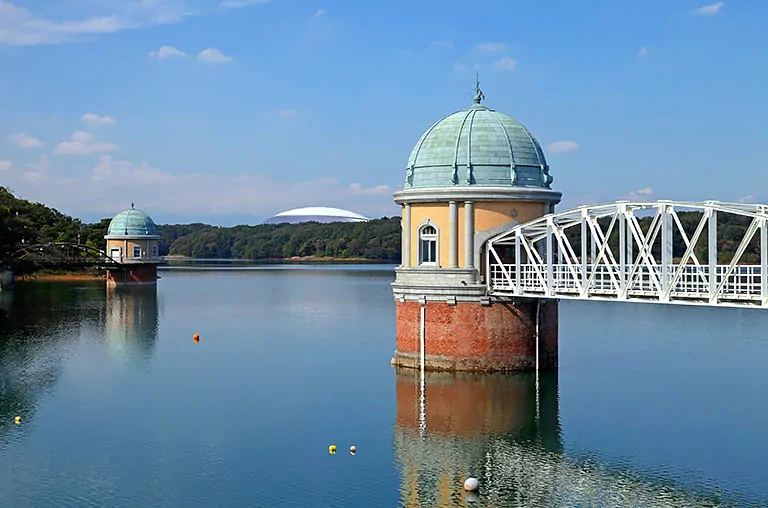
Why Grade 316L Stainless Steel Was Selected
Tokyo adopted Grade 316L stainless steel, a material widely used in sanitary and corrosion-sensitive environments.
Its advantages include:
- strong resistance to corrosion in underground conditions
- suitability for drinking water systems
- long operational lifespan compared to cast iron or lead
- reduced long-term maintenance requirements
This made it ideal for a city-wide infrastructure upgrade.
Engineering Innovation: Corrugated Pipe Technology
The adoption of stainless steel was not the only innovation.
Tokyo engineers also developed advanced pipe-forming techniques.
According to industry experts:
corrugated stainless steel pipes were introduced
pipes could be bent into required angles more easily
fewer joints were needed across the system
This was important because:
> fewer joints mean fewer potential leakage points.
To ensure system integrity, stainless steel fittings such as elbows, T-junctions, and connectors were also developed as part of a unified system.
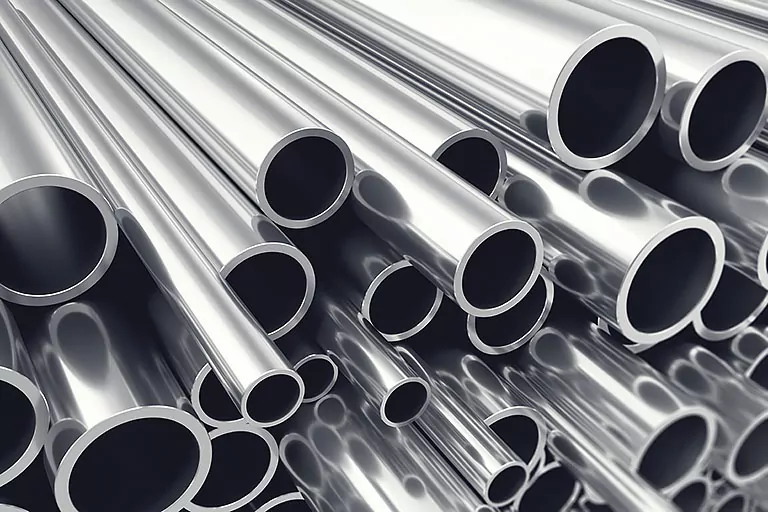
System-Wide Replacement and Results
By 2012, Tokyo had fully replaced all service pipes connecting main water lines to households and commercial buildings with stainless steel systems.
The results were significant:
- water loss reduced from 17% to 2%
- approximately 200 million cubic meters of water saved
- nearly $4 billion USD in cost savings
These savings included reduced:
- maintenance operations
- repair frequency
- reservoir expansion requirements
- long-term infrastructure replacement costs
Why Stainless Steel Made the Difference
The success of Tokyo's system was not only due to replacement, but due to material performance over time.
Stainless steel provided:
- stable long-term structural integrity
- resistance to corrosion in underground environments
- improved seismic resilience
- reduced failure rates across the distribution network
This transformed water infrastructure from a reactive repair system into a stable long-life network.
Global Impact and Adoption
Water loss is not unique to Tokyo.
According to OECD estimates, water loss rates in many developed cities range between 17% and 30%, including:
- London
- Paris
- Rome
Following Tokyo's success, several cities began adopting similar approaches.
Seoul launched comparable infrastructure upgrades
Taipei implemented projects initially supported by Tokyo contractors
other cities continue evaluating stainless steel systems for long-term deployment
The trend reflects a broader shift toward lifecycle-based infrastructure planning.
Industrial Material Perspective
Large-scale infrastructure upgrades such as Tokyo's water system modernization rely heavily on consistent, high-quality material supply chains.
Stainless steel pipe systems require:
- corrosion-resistant alloys
- precise dimensional control
- long service life reliability
- compliance with potable water standards
Industrial metal suppliers such as Jiangsu Cunrui Metal Products Co., Ltd. contribute to this ecosystem by providing stainless steel and alloy materials widely used in infrastructure, pipeline systems, and engineering applications where durability and corrosion resistance are essential performance factors.
Conclusion: A Material Decision That Changed a City
Tokyo's experience demonstrates that infrastructure performance is not only determined by engineering design-but also by material selection.
By replacing outdated pipe systems with stainless steel, the city achieved:
- dramatic reduction in water loss
- long-term cost savings
- improved seismic resilience
- enhanced system reliability
What began as a maintenance challenge became a global reference case for urban water management.
The lesson is clear:
> in infrastructure systems, material choice is not a detail-it is the foundation of long-term efficiency.


